
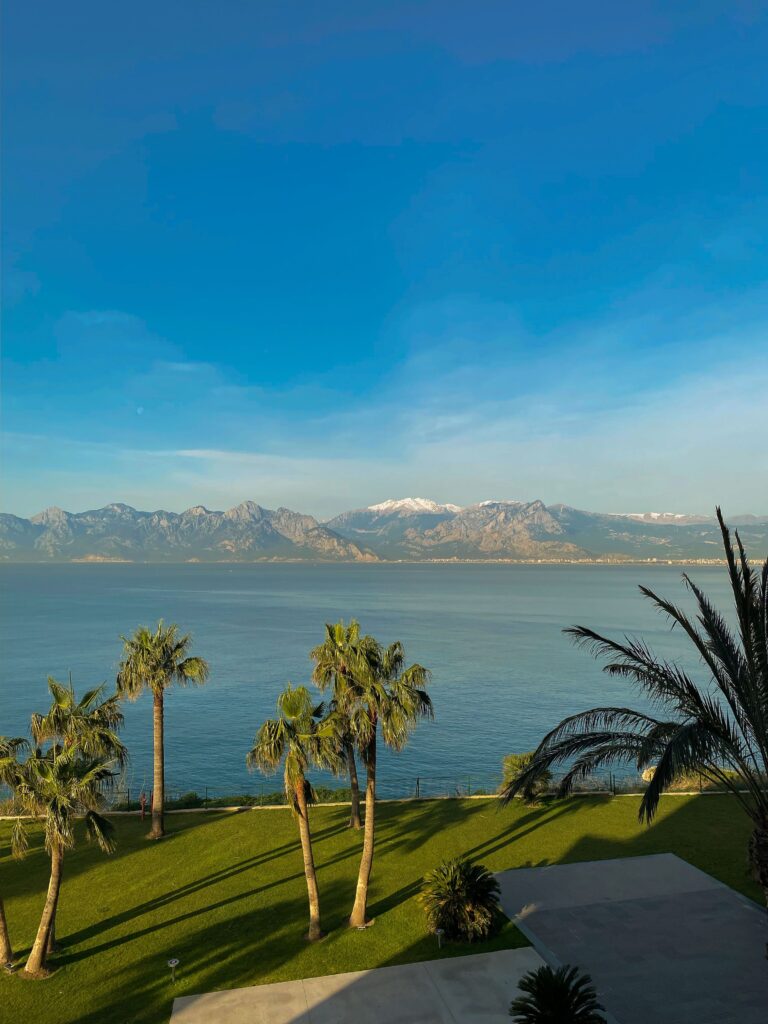
I live here, so let me save you twenty minutes of reading: yes, Antalya is worth visiting, but not for the reasons the brochures give, and not for everyone. Fifteen million people visit this coast every year, and a meaningful number of them booked the wrong Antalya for the wrong reasons. This guide explains what is genuinely world-class here, what will honestly disappoint you, which traveler this city rewards, and which traveler should book somewhere else. No tourist-board fluff, just the answer a local would give a friend.
Already leaning towards yes?
Browse the tours and experiences that make Antalya worth the trip:
Check Price & Availability ›✅ Free cancellation up to 24 hours before · ✅ Reserve now, pay later
📝 A Local’s Note
The people I see leave happiest are the ones who picked a small number of things to do properly rather than trying to sample everything the region offers. One good day trip and one boat day, done unhurried, beats three rushed half-days every time.
If you’re the sort of traveller who reads reviews obsessively before booking anything, know that this coast has a very wide range of tour quality within the same activity. A cheap boat trip and an expensive one can be genuinely different days out, not just different price points, so don’t assume the bottom of the list is a shortcut to the same experience.
The Short Answer
Antalya is one of the very few places in the Mediterranean where three completely different holidays overlap: a serious ancient-history destination, a proper beach coast, and a mountain adventure region, all within an hour of each other. That combination is rare. Rome has the ruins but no beach. The Greek islands have the beach but nothing like this density of ancient cities. The Alps have the mountains but no sea. Antalya has all three, at roughly half the price of Western Europe.
The catch: the magic is concentrated in specific places, and the modern city between them is an ordinary Turkish city of apartment blocks and traffic. Visitors who know where the good parts are love it here. Visitors who expected the whole city to look like a postcard sometimes leave confused. This guide makes sure you are in the first group.
What Is Genuinely World-Class Here
The ancient cities. This is not polite exaggeration: the region around Antalya holds one of the densest concentrations of Greco-Roman cities on earth. Aspendos has a Roman theatre so complete it still hosts performances, with acoustics that carry a whisper from stage to top row. Perge has a colonnaded main street where the Roman water channel still runs down the middle. Termessos sits at over 1,000 metres in the mountains, unexcavated and half-wild, and even Alexander the Great decided it was not worth attacking. In Rome or Athens, sites like these would be behind timed tickets and queues. Here, on a spring morning, you might have them to yourself.
Kaleiçi, the old town. A genuinely lived-in historic quarter, not a reconstruction: Ottoman mansions, Roman walls, Hadrian’s marble gate from 130 AD, and a small harbour that worked continuously from Roman times until the 1970s. It is one of the Mediterranean’s most underrated old towns, and staying inside it is the single best decision a first-time visitor can make.
The day-trip range. From a single base you can reach Pamukkale’s white travertine terraces, the sunken city of Kekova, the mountain flames of Chimaera, Side’s seafront temple, and dozens of coves reachable only by boat. Very few cities anywhere offer this reach. Our ranked day trips guide compares them honestly.
The adventure scene. White-water rafting through Köprülü Canyon under 2,000-year-old Roman bridges, the Tahtalı cable car to a 2,365-metre summit rising straight from the sea, paragliding, diving, canyoning, and sections of the 500-km Lycian Way trail. This is not resort-brochure “adventure”; it is the real thing.
The value. For anyone earning in euros, dollars or pounds, Antalya delivers a five-star Mediterranean holiday at a price the French or Italian coasts stopped offering decades ago. Local restaurants, transport and shoulder-season hotels are genuinely affordable.
The experiences above — Aspendos, boat coves, Köprülü rafting, Pamukkale — are all bookable as guided tours with hotel pickup:
Check Price & Availability ›✅ Free cancellation up to 24 hours before · ✅ Reserve now, pay later
The Honest Downsides
A guide that only praises is an advertisement. Here is what locals actually warn friends about:
July and August are brutally hot. Not “warm”, hot: 35–40°C, with ruins sitting on exposed stone that radiates heat back at you. Midday sightseeing in high summer is genuinely unpleasant and, for older visitors, unwise. If your dates are fixed in these months, the rule is simple: ruins before 10 AM, water from noon, city in the evening. If your dates are flexible, come in May, June, September or October instead and get the same coast at 28°C.
Tourist-strip pricing and small scams. The same grilled fish costs three or four times more at a harbourside terrace than at a local lokanta ten minutes’ walk inland. Airport taxi overcharging is a known problem: use the tram, a pre-booked transfer, or the BiTaksi app with the meter running. None of this is dangerous, but going in aware saves real money. Our budget guide covers the tricks.
“Antalya” means two completely different holidays. The all-inclusive mega-resorts of Lara and Belek are enormous self-contained worlds: waterparks, ten restaurants, private beaches. Excellent at what they do, but they are not the charming old town, and the old town is not them. Every year, travelers book one expecting the other. Decide which Antalya you want before you pay: our where to stay guide exists precisely for this decision.
The modern city is ordinary. Outside Kaleiçi, the beaches and the sites, Antalya is a working Turkish city of a million-plus people: concrete, traffic, shopping malls. Locals like me are fond of it, but it is not why you fly here. Plan around the highlights and this never becomes a problem.
Independent exploring needs wheels. Public transport covers the city brilliantly but not the mountain villages, remote coves and far-flung ruins. The fix is either a rental car or organised tours with hotel pickup, which honestly solve the problem with zero stress. Our car vs tours comparison weighs both.
Who Antalya Is Perfect For
Travelers who want history and sea in one trip, without choosing. Couples after Mediterranean scenery at sane prices. Families, because the resort infrastructure here is arguably the best in the Mediterranean. Adventure travelers, for the rafting-hiking-diving depth. And first-time Turkey visitors: the airport is one of Europe’s best connected, English works everywhere touristic, and the city is an easy, forgiving introduction to the country.
Who Should Book Somewhere Else
If your holiday is primarily about nightlife and party scenes, Bodrum does it better. If you want yacht-marina glamour and celebrity-spotting, that is the French Riviera’s job, not ours. If you hate heat and can only travel in August, consider Turkey’s cooler Black Sea coast. And if you want a month of slow living like a local, smaller towns along this same coast, like Kaş or Çıralı, offer that mood better than the big city; our Kaş guide is a good starting point.
Is Antalya Worth It in Summer? In Winter?
Summer, yes with a plan. Warmest sea, longest days, maximum energy, and maximum heat, crowds and prices. Schedule around the sun as described above and summer works beautifully. See Antalya in July and Antalya in August for the month-level detail.
Winter, yes for a specific trip. November to March brings the lowest prices of the year, empty ruins, snow on the mountains behind a blue sea, and 15–18°C sightseeing weather. It is not a beach holiday; it is a culture-food-and-hamam holiday at a third of the cost. Antalya in January has the full winter picture.
The golden windows remain May–June and September–October, and if you can choose your dates freely, choose those. The month-by-month guide compares all twelve.
Decided which Antalya is yours?
Compare Kaleiçi boutique hotels and Lara resorts side by side:
Check Price & Availability ›✅ Free cancellation on many rooms · ✅ Book now, pay at the hotel
Is Antalya Worth Visiting: FAQ
Is Antalya worth visiting?
Yes, for most travelers. Antalya uniquely combines world-class ancient ruins, a beautiful Mediterranean coast, a historic old town and serious adventure activities at significantly lower prices than Western Europe. The best months are May, June, September and October.
Is Antalya overrated?
Only for travelers who expected the entire city to look like a postcard. The highlights, Kaleiçi, the ancient cities, the coast and the mountains, are genuinely exceptional, while the modern city between them is ordinary. Internationally, Antalya is arguably underrated rather than overrated.
Is Antalya expensive?
Not by Mediterranean standards. Tourist-strip restaurants in peak season charge premium prices, but local restaurants, public transport and shoulder-season hotels are very affordable. Overall costs run well below Spain, Italy or Greece for comparable quality.
How many days do you need in Antalya?
Three to four days covers the highlights: the old town, Perge and Aspendos, a boat tour and one major day trip. Five to seven days allows a relaxed pace with several day trips.
Is Antalya better than Istanbul?
They are different trips. Istanbul is one of the world’s great cities, deep, complex and urban. Antalya is a Mediterranean coastal destination built around ruins, beaches and mountains. Most visitors to Turkey benefit from seeing both.
Is Antalya good for a first trip to Turkey?
Yes, one of the best. The airport has direct flights from most of Europe, tourist infrastructure is excellent, English is widely spoken in visitor areas, and the city offers a genuine but manageable introduction to Turkey’s history, food and coast.
Final Verdict
Antalya is worth visiting, and I say that as someone who could write the opposite article for clicks. The travelers who leave disappointed almost always made one of three fixable mistakes: they came in August without a heat plan, they booked a Lara resort expecting an old-town holiday or vice versa, or they never left the hotel to see what makes this coast extraordinary. Avoid those three, come in a golden-window month if you can, stay in Kaleiçi, take one boat trip and one big day trip, and stand once in the theatre at Aspendos. Do that, and you will book more nights next time. Everyone does.
Ready to see it for yourself?
Compare all Antalya tours, boat trips and day trips in one place:
Check Price & Availability ›✅ Free cancellation up to 24 hours before · ✅ Reserve now, pay later
🧭 Keep planning your Antalya trip:
Page last updated: August 2026.
🚗 Need a Private Transfer or Luxury Vehicle in Antalya?
We arrange private airport transfers, intercity transfers and luxury vehicle hire across the Antalya region. Message us on WhatsApp for a quick quote.
💬 WhatsApp +90 533 653 02 90