
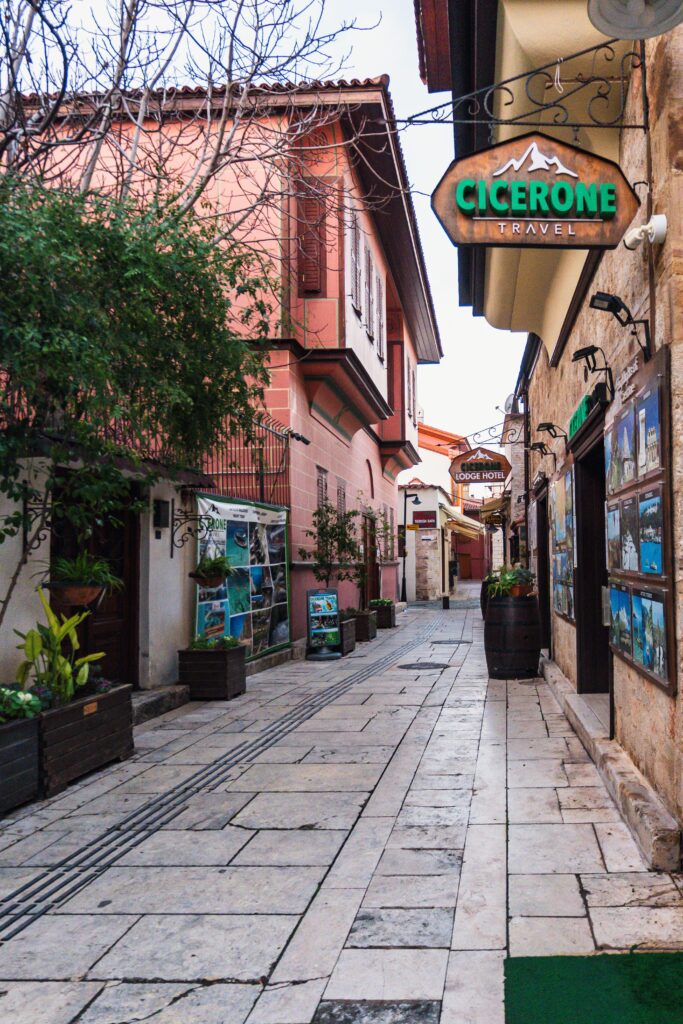
Yes, Antalya’s old town is genuinely good for shopping — with the right expectations. Kaleiçi is where you come for souvenirs, carpets, ceramics, spices and handmade things, browsed in lantern-lit Ottoman lanes rather than under mall lighting. It is not where you come for branded goods or bargain electronics; the city has malls for that. This guide, from a local who has watched every kind of shopper walk these lanes, covers exactly what to buy, where the honest shops cluster, how bargaining actually works here, and the handful of traps worth knowing before your money leaves your pocket.
📝 A Local’s Note
If you’re buying anything you plan to actually use, like a leather bag or a scarf, ask to see it in daylight before finalising, not just under the shop’s warm interior lighting. Colours in particular can look noticeably different once you step outside.
Shops that offer to ship a carpet home for you are usually legitimate and it’s a common, well-established service here, but get the shipping cost and estimated delivery time in writing before you pay, rather than as a verbal promise.
What Can You Buy in Kaleiçi?
The cobblestone lanes are lined with a fairly consistent cast of shops, and here is the honest scouting report on each:
Turkish carpets and kilims. The full spectrum lives here, from machine-made pieces priced like handmade ones to genuinely beautiful handwoven rugs. The gap between those two is exactly why we wrote a complete guide to buying Turkish rugs in Antalya — read it before entering a carpet shop and you shop as an insider, not a target. Short version: ask if it is handmade, flip it over (handmade knots are visible and slightly irregular on the back), and remember that Antalya’s own Döşemealtı carpets are the regional specialty with real provenance.
Leather goods. Bags, belts, jackets. Quality varies enormously; smell and stitching tell the truth faster than the salesman does.
Ceramics and pottery. İznik-style tiles, bowls and plates in cobalt and turquoise, some of the most photogenic souvenirs Turkey makes. Tagged, fixed-price pieces in the better shops.
Jewellery. Silver, semi-precious stones, and nazar pieces in every form. Reputable shops weigh silver in front of you.
Spices and food. Saffron (see the traps section below), sumac, pul biber, dried fruits, Turkish delight and baklava. Wonderful gifts, light in the suitcase.
Nazar boncuğu (evil eye). The classic blue glass amulet in every size from earring to wall plate. Cheap, cheerful, and the one souvenir that never disappoints anyone back home.
Silk scarves, pashminas, handmade soaps. Olive oil and rose soaps especially; small, inexpensive, and actually used by the people you gift them to.
Where Exactly to Shop
The old town’s commerce has a geography, and knowing it saves time:
Uzun Çarşı Street — the “Long Bazaar,” running down from near the clock tower, is the spine of Kaleiçi shopping and has been a market street since Ottoman times. The widest selection and the most atmosphere, plus the highest tourist markup, which is what the bargaining section below is for.
The lanes radiating from Hadrian’s Gate — quieter side-street shops, often with better prices than the main drag and more room for conversation.
The harbour area — shops here skew toward quick tourist trinkets for cruise passengers. Fine for a fridge magnet; not where you buy a carpet.
The bazaar near the clock tower — the transition zone between tourist Kaleiçi and the real city, and the best hunting ground for spices and food products at closer-to-local prices.
The covered bazaar (Çarşı) just outside the old town — this is where locals actually shop: spices, nuts, dried fruit, produce, household goods, at genuinely local prices. If you want the authentic market experience and honest food prices, walk the extra five minutes. Your saffron and Turkish delight money goes twice as far here.
How Bargaining Actually Works Here
Bargaining in Kaleiçi is expected in carpet, leather, jewellery and souvenir shops, and — this is the part guidebooks miss — it is treated as a conversation, not a confrontation. The ritual usually involves tea, questions about where you are from, and a leisurely pace. Rushing it is the only real faux pas.
The practical mechanics: counter-offering at 50–60% of the opening price is normal and causes no offence in rug and souvenir shops. Meet somewhere in the middle, shake hands, everyone smiles. Two useful rules from a local: never start bargaining for something you would not actually buy at your own price (walking away from an agreed price is genuinely rude here), and the phrase “çok güzel ama çok pahalı” — very beautiful but very expensive — delivered with a smile, does more work than any negotiating tactic.
Where bargaining does not apply: food with price tags, ceramics with fixed labels, and anything in an actual shop with a till and barcodes. Attempting to haggle over baklava marks you as a beginner.
The Tourist Traps, Named
A short honest list, because forewarned is forearmed:
“Genuine saffron” at miracle prices. Real saffron is one of the most expensive substances in any kitchen. The huge bags of vivid red threads sold cheap in tourist lanes are safflower, a different plant entirely. Pretty, harmless, and not saffron. Buy small quantities of the real thing at the covered bazaar, or buy the safflower knowingly for the colour.
“Handmade” carpets at machine prices. Covered above; flip the rug, check the back, read our rug guide first.
“Genuine leather” that smells of chemicals. Real leather smells like leather. Trust your nose over the label.
Harbour-front restaurant prices. Not shopping, but the same rule of geography: beautiful location, 3–4x markup. Eat two streets back. The full money-saving playbook is in Antalya on a budget.
Kaleiçi vs the Malls vs Side
For souvenirs, crafts and atmosphere, Kaleiçi wins without contest; browsing between Ottoman walls beats mall corridors every time. For branded goods, electronics and everyday shopping, the city’s modern malls — Mark Antalya near the centre and Terra City out toward Lara — are the correct destination, with fixed prices and air conditioning. And if your itinerary includes the day trip to Side, its old town offers a similar souvenir-lane experience between actual Roman columns, arguably the most scenic shopping backdrop on the coast.
Shop smarter with a local guide
An old town walking tour with food tastings covers the lanes, the history and the honest shops in one go:
Check Price & Availability ›✅ Free cancellation up to 24 hours before · ✅ Reserve now, pay later
Shopping in Antalya Old Town: FAQ
Is Antalya Old Town good for shopping?
Yes, Kaleiçi is excellent for souvenirs, Turkish carpets, ceramics, jewellery, spices and leather goods, all browsed in an atmospheric historic setting. For branded and everyday goods, the city’s modern malls are the better choice.
What should I buy in Antalya Old Town?
The best buys are Turkish carpets and kilims, İznik-style ceramics, nazar evil eye amulets, spices and Turkish delight, handmade olive oil soaps, silk scarves and silver jewellery. Regional Döşemealtı carpets are Antalya’s own specialty.
Can you bargain in Antalya Old Town?
Yes, bargaining is expected in carpet, leather, jewellery and souvenir shops, and counter-offering at 50 to 60 percent of the opening price is normal. Fixed-price items such as tagged ceramics and food are not negotiated.
Where is the best place to shop in Kaleiçi?
Uzun Çarşı Street and the lanes around Hadrian’s Gate hold the main concentration of shops. The bazaar near the clock tower and the covered market just outside the old town are best for spices and food at closer-to-local prices.
Is shopping expensive in Antalya Old Town?
Tourist-lane prices carry a markup, but with normal bargaining, overall costs remain well below Western Europe. For food products, the covered bazaar outside the old town offers genuinely local prices.
Final Thoughts
Shopping in Kaleiçi is less a transaction and more an afternoon: tea appears, stories get told, a rug gets unrolled that you had no intention of buying, and somewhere between the second glass and the third carpet you understand why this street has been selling things for five hundred years. Come for the nazar and the spices, learn the two magic bargaining rules, keep your saffron wits about you, and you will carry home the good kind of souvenir — the kind with a story attached.
🛍️ More Antalya shopping & old town reading:
Page last updated: August 2026.
🚗 Need a Private Transfer or Luxury Vehicle in Antalya?
We arrange private airport transfers, intercity transfers and luxury vehicle hire across the Antalya region. Message us on WhatsApp for a quick quote.
💬 WhatsApp +90 533 653 02 90